

Every great wine culture has a secret. France has its châteaux and their centuries of aristocratic polish. Italy has its sun-drenched chaos and ten thousand indigenous grapes. But Hungary? Hungary has something rarer than either of those things.
It has survival.
The story of Hungarian wine is not simply a story of grapes and soil. It is a story of invasion and resurrection. Of a culture repeatedly buried and repeatedly reborn. Of people who, no matter what was taken from them land, language, autonomy, identity never let go of the vine.
Pour yourself a glass. This story deserves your full attention.
The Romans Planted the First Seeds
Long before Hungary was Hungary, the land was Pannonia. And Pannonia, under Roman occupation, was a wine country.
Roman settlers planted vineyards along the Danube and the Balaton lowlands as early as the 2nd century AD. They understood what this land was capable of: mineral-rich soils, long continental summers, cool nights that preserved acidity and elegance. They did not plant vines out of sentiment. They planted them because the land demanded it.
When the Romans withdrew, the vines remained. And for those who came after the Magyar clans arriving from the east in the 9th century, wine was already woven into the fabric of the land they inherited.
The Kingdom and Its Vineyards
By the medieval era, Hungary was not merely producing wine. It was producing wine of consequence.
The Kingdom of Hungary controlled some of the most coveted viticultural land in Central Europe. Tokaj, that haunted, fog-softened region in the northeast was already drawing the attention of royal courts. The Aszú wines of Tokaj, made from grapes kissed by noble rot, were among the first wines in the world to be produced from a defined, classified region. Louis XIV of France is said to have called Tokaj the king of wines and the wine of kings. He was not exaggerating.
Meanwhile, Hungarian vineyards across the Eger, Villány, and the hills of the Etyek wine region were producing wines traded across the continent. Hungary sat at the crossroads of empires and its wine moved with the merchants, the diplomats, and the armies that passed through.
Wine was currency. Wine was power. Wine was, quite simply, what Hungary offered the world.
The Ottoman Occupation and the Silence That Followed
Then came the shadow.
In 1526, the Ottoman Empire swept into Hungary after the Battle of Mohács. For nearly 150 years, much of the country fell under occupation. In a culture that did not drink wine, the vineyards of central Hungary withered. Winemakers fled north and east. Knowledge moved underground into the cellars and hillside caves where barrels could be hidden and traditions quietly preserved.
What is remarkable is not what was lost. It is what survived.
In the northern regions Tokaj, Eger, the areas that remained under Hungarian or Habsburg control winemaking continued. Defiant. Quiet. Stubborn in the way of people who understand what they stand to lose. When the Ottomans were finally expelled in the late 17th century, the vineyards came back to life with a speed that suggested they had never truly died.
Habsburg Elegance and the Golden Age
Under Habsburg rule, Hungarian wine entered what many historians consider its golden era.
Tokaji Aszú was codified, classified, and exported across Europe. Eger’s wines developed a fierce reputation. The Hungarian vineyards of Etyek supplied the royal capital with elegant, cool-climate wines that suited the ballrooms of the Austro-Hungarian aristocracy.
This was a period of refinement of winemakers with the luxury of thinking not just about survival, but about excellence. For a few magnificent decades, Hungary occupied a place at the very top of the European wine hierarchy.
It would not last.
The 20th Century: War, Communism, and the Underground
Two world wars devastated the Hungarian countryside. Vineyards were torn up for trenches, bombed, and abandoned. The multigenerational understanding of a specific hillside, a specific variety, a specific way of working the land, fractured in ways that cannot be easily measured.
And then came the Communist era.
Under state collectivisation, Hungary’s vineyards were nationalised. The focus shifted to volume over quality. Ancient varieties were ripped out and replaced with high-yielding, characterless grapes. Specific estates, specific parcels, centuries of tradition all erased into grey uniformity.
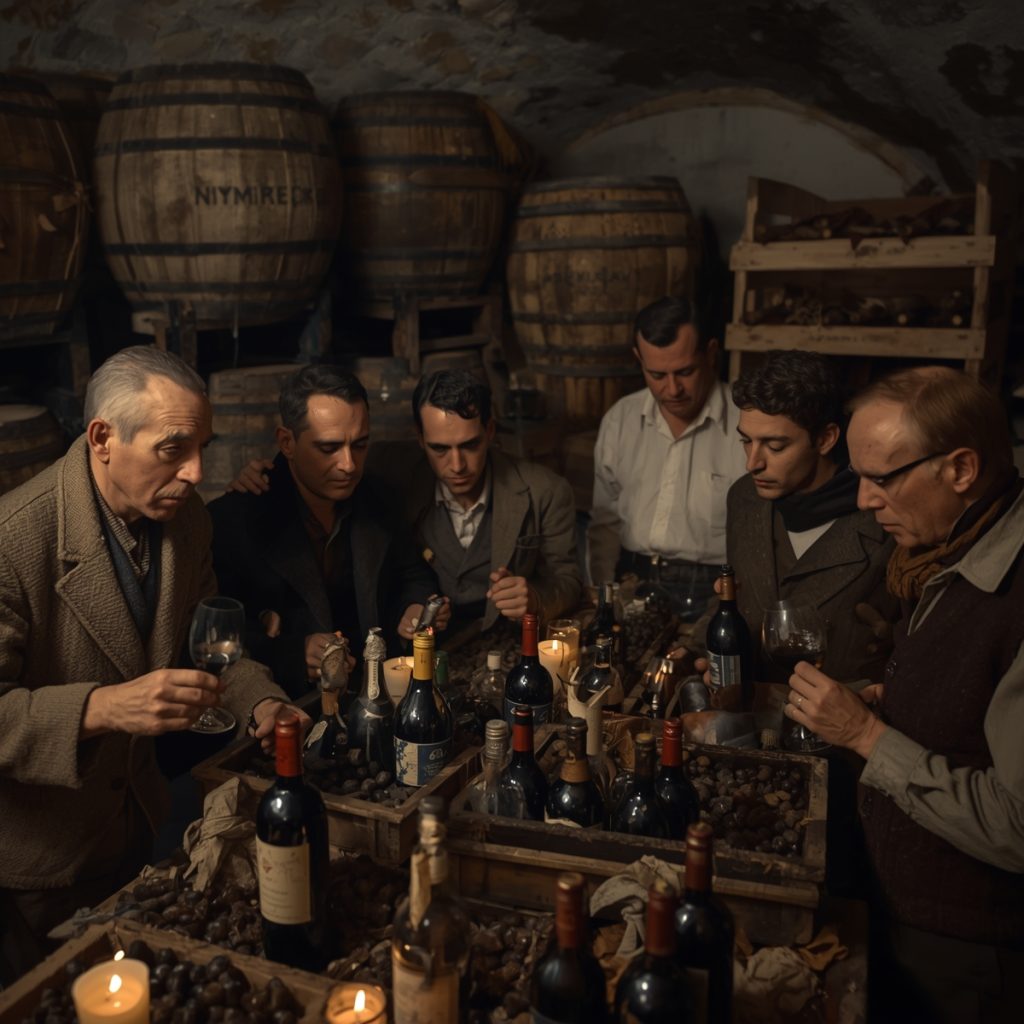
But the cellars held their secrets. Hungarians built dual cellars, one to show the authorities, one to protect what mattered. They bartered bottles like contraband, keeping alive the varieties the state wanted to bury: the delicate Hárslevelű, the earthy Kadarka, the silky Furmint. When the system collapsed in 1989, those secret cellars became the foundation of everything that followed.
The Renaissance: Hungarian Wine Rediscovers Itself
The 1990s were chaotic. The 2000s were experimental. But by the 2010s, something undeniable was happening.
A new generation of Hungarian winemakers educated, passionate, and fully aware of what their predecessors had protected began building something serious. Ancient varieties were replanted. Forgotten hillsides were rediscovered. Terroir-driven winemaking arrived at precisely the moment the world was ready to listen.
The Etyek wine region emerged as one of the most exciting addresses for cool-climate viticulture in Central Europe. Pinot Noir and Chardonnay found an unexpected home in its limestone soils. Premium Hungarian wines began appearing on lists in London, Paris, and New York.
Gluck Estates, in the heart of Etyek, is part of this living renaissance. Every bottle carries that long arc Roman settlers, medieval kings, Ottoman silences, Communist cellars, and now, finally, the open light of a wine culture that has earned its place among the world’s finest.
Why Hungarian Wine History Matters to Every Wine Lover
History lives in wine in ways it lives nowhere else.
When you raise a glass whether wine tasting in Budapest or on a sun-warmed terrace overlooking Hungarian vineyards in Etyek you are drinking something that connects to all of this. To Romans who first read the soil. To medieval traders who moved bottles across empires. To families who hid their barrels behind coal stacks and refused to surrender what they knew was worth keeping.
That history doesn’t just make Hungarian wine interesting. It makes it meaningful. And meaning is what separates a drink from an experience.
Come and Taste the Story for Yourself
There is no better way to understand a wine culture than to stand inside it.
The vineyard experience Hungary offers today in the Etyek wine region, a short drive from Budapest is one of the most rewarding journeys a wine lover can make. Visit Gluck Estates to taste wines shaped by this extraordinary history and raise a glass to every generation that made it possible.
The story is still being written. You are warmly invited to be part of it.
Explore our wines and plan your visit at gluckestates.com